


Migraine Treatments That Can Help Lower Your Headaches

Migraines are more than just headaches.
They are a complex neurological condition that can significantly disrupt daily life. Many patients struggle not only with the pain itself, but also with missed work, poor sleep, and reduced quality of life.
The goal of treatment is not just temporary relief, but to reduce your overall headache burden meaning fewer migraine days, less severe symptoms, and better day-to-day function.
At our practice, we take a comprehensive, evidence-based approach that combines different targeted therapies.
Understanding Migraine: Why Treatment Needs to Be Comprehensive
Migraines often involve overlapping mechanisms, including:
Nervous system sensitization (brain-trigeminal-vagus system)
Muscle tension in the head, jaw, and neck (trigeminocervical complex)
TMJ dysfunction (trigeminal system)
Sleep disturbances
Lifestyle and environmental triggers
Because of this, effective care requires a multi-modal approach.
1. Lifestyle Foundations That Reduce Migraine Frequency
Daily habits play a significant role in migraine patterns.
Key strategies include:

Maintaining a consistent sleep schedule
Staying well hydrated
Managing stress (breathing, mindfulness, relaxation techniques)
Identifying dietary triggers
Engaging in regular, moderate exercise
Supplements like Magnesium glycinate, Co-Q, riboflavin
These foundational changes can significantly reduce migraine frequency over time.
2. Acute Treatments to Stop a Migraine Attack
When a migraine begins, early intervention can reduce its severity and duration.
These include:
Over-the-counter medications (e.g., ibuprofen, acetaminophen)
Targeted Abortive Prescription medications (Abortive= to abort/stop)
Anti-nausea medications when needed
Supportive measures like cold/ warm compresses and resting in a dark, quiet room
These treatments are designed to abort or shorten an active migraine episode.
3. Preventive Treatments to Lower Headache Burden
For patients with frequent migraines (>15 days per month), preventive therapy is essential.
These may include:
Botox® injections for chronic migraine
Traditional Preventive medications (beta-blockers, etc.)
Newer targeted preventative therapies which are migraine-specific
The goal is to reduce how often migraines occur, not just treat them when they happen.
4. Neuromodulators & Advanced Pain Modulation
Neuromodulation is an emerging and effective approach for migraine management. These therapies work by modulating nerve activity and pain signaling pathways.
These may include:
External trigeminal nerve stimulation devices
Non-invasive vagus nerve stimulation
Other wearable neuromodulation technologies
These are particularly helpful for patients who:
Prefer non-medication options
Have medication side effects
Need adjunctive therapy for better control
Neuromodulators can be used for both acute relief and prevention, depending on the device and indication.

5. Muscle & TMJ-Related Treatments
Muscle tension is one of the most under-recognized contributors to migraines.
We often identify involvement of:
Temporalis and masseter muscles
Cervical and suboccipital muscles
Treatment options include:
Addressing these factors can significantly reduce referred pain into the head.


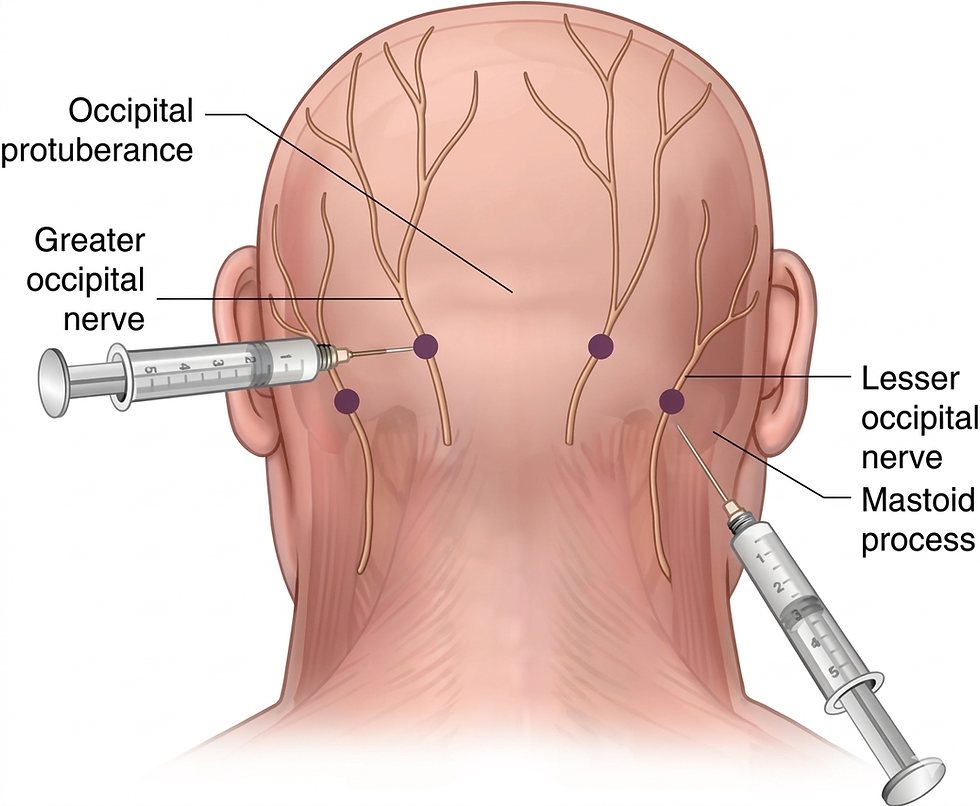
6. Nerve-Targeted Therapies
Peripheral nerve sensitization plays a major role in many migraine patients.
We may utilize:
Greater occipital nerve blocks
Lesser occipital nerve blocks
Trigeminal nerve branch blocks (Supratrochlear and Supraorbital Nerve Blocks)
These treatments can provide both diagnostic clarity and therapeutic relief, helping calm an overactive pain system.

7. Sleep Optimization & Airway Management
Sleep disturbances, especially obstructive sleep apnea (OSA), are a common but often overlooked migraine trigger.
Improving sleep can lead to:
Reduced migraine frequency
Fewer morning headaches
Better daytime energy
Custom oral appliance therapy can be an effective solution for appropriate patients.

8. Complementary & Behavioral Therapies
Non-pharmacologic therapies can enhance long-term outcomes.
These include:
Biofeedback
Cognitive behavioral therapy (CBT)
Stress management strategies
Acupuncture (in selected cases)
These approaches help reduce triggers and improve overall migraine control.
9. Daily Strategies to Stay in Control
Migraine management is ongoing and personalized.
Helpful tools include:
Keeping a migraine diary
Planning ahead for known triggers
Regular follow-ups for treatment adjustments
Educating family and support systems
These strategies create a more predictable and manageable routine.
About Our Practice
At Advanced TMJ Maxillofacial Pain & Sleep Center in Seattle, we provide a unique, comprehensive approach to migraine care.
Our practice is led by a board-certified Orofacial Pain specialist, Diplomate of Orofacial Pain and Diplomate of American Board of Dental Sleep Medicine with advanced training in:
Headache and migraine disorders
TMJ and jaw-related pain
Neuropathic facial pain
Dental sleep medicine
What makes our approach different:
We evaluate both neurological and musculoskeletal contributors to migraine
We identify often-overlooked factors such as TMJ dysfunction, muscle pain, and sleep disorders
We focus on conservative, evidence-based care, avoiding unnecessary procedures
We coordinate care with neurologists, sleep physicians, and other providers when needed
Many patients come to us after trying multiple treatments without success. By taking a more comprehensive view, we are often able to identify missed contributors to their pain and develop a more effective plan.
The Bigger Picture
Migraines are rarely caused by a single issue.
Most patients have a combination of:
Muscle tension
Nerve sensitization
TMJ dysfunction
Sleep disturbances
Lifestyle triggers
By addressing all contributing factors, not just masking symptoms, we aim to provide long-term, meaningful relief and help you regain control of your daily life.


Please feel free to suggest topics you'd want to learn more about,